


Path Analysis, Structural Equations, and Causal Inference for Biologists (PSCBPR)
Online SEM and causal inference course for biologists. Learn path analysis, d-separation, latent variables, and multigroup models using R.
 Duration: 35 hours
 Format: Recorded ‘on-demand’ Format
£450Registration Fee
Register NowLike what you see? Click and share!


- Overview
- Instructors
- Schedule
Course Description
This 35 hour course approx. 20 hours of lectures and 15 hours of practicals, is based primarily on Bills 2016 book which teaches you how to use path analysis and structural equations modelling to test causal hypotheses using observational data that is typical of research in ecology and evolution. It is taught in half-day sessions so that you can practice individually after each session. You will learn how to conduct these tests, why (and when) they are justified, and how to interpret the results. The first few lectures will primarily present the theory but practical sessions will become more prominent later in the course. The practical work will be based on R and RStudio. Students will receive R script, datasets, and a list of R packages to install. It is highly recommended that each student have a copy of Bills2016 book for the course, but not essential.
What You’ll Learn
During the course will cover the following:
- Understand the logical relationships between d-separation, data, and causal hypotheses.
- Know when to use piecewise SEM, when to use covariance- based SEM, and the advantages/disadvantages and assumptions of each.
- Be able to construct, test, and interpret measurement models involving latent variables.
- Be able to construct and identify equivalent models.
- Be able to incorporate nested or mixed models, multigroup models, and non-normal distributions into SEM.
Participants are encouraged to bring their own data, as there will be opportunities throughout the course to plan, analyze, and receive feedback on structural equation models.
Course Format
Flexible Learning Structure
Learn through a carefully structured mix of lecture recordings and guided exercises that you can pause, revisit, and complete at your own pace—ideal for busy professionals or those balancing multiple commitments.
Access Anytime, Anywhere
All course content is available on-demand, making it accessible across all time zones without the need to attend live sessions or adjust your schedule.
Independent Exploration with Support
Engage deeply with course topics through self-directed study, with the option to reach out to instructors via email for clarification or deeper discussion.
Comprehensive Learning Resources
Gain full access to the same high-quality materials provided in live sessions, including code, datasets, and presentation slides—all available to download and keep. Please note recordings can only be streamed.
Work With Your Own Data, On Your Terms
Apply what you learn directly to your own data projects as you go, allowing for a personalized and immediately practical learning experience.
Continued Guidance and Resource Access
Receive 30 days of post-enrolment email support and unrestricted access to all session recordings during that time, so you can review and reinforce your learning as needed.
Who Should Attend / Intended Audiences
This course is intended for biologists, particularly ecologists interested in testing hypotheses about cause-and-effect relationships involving multiple variables, especially using observational data, will benefit from this material. It assumes experience with R and RStudio for statistical analysis, along with a basic understanding of statistical inference and regression methods. While familiarity with more advanced regression models, such as mixed models and generalized linear models, is an asset, it is not required. Proficiency in R is expected, including skills in importing and exporting data, manipulating data within the R environment, and constructing and evaluating basic statistical models using functions like lm().
Equipment and Software requirements
A laptop or desktop computer with a functioning installation of R and RStudio is required. Both R and RStudio are free, open-source programs compatible with Windows, macOS, and Linux systems.
A working webcam is recommended to support interactive elements of the course. We encourage participants to keep their cameras on during live Zoom sessions to foster a more engaging and collaborative environment.
While not essential, using a large monitor—or ideally a dual-monitor setup—can significantly enhance your learning experience by allowing you to view course materials and work in R simultaneously.
All necessary R packages will be introduced and installed during the workshop. A comprehensive list of required packages will also be shared with participants ahead of the course to allow for optional pre-installation.
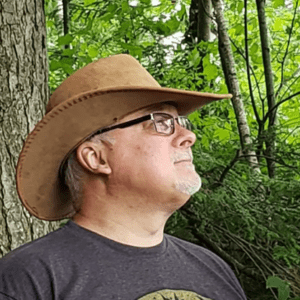
Prof. John William (Bill) Shipley
Bill is a plant ecologist and statistical ecologist with a long-standing research career focused on understanding the structure and function of ecological systems using rigorous statistical methods. His work spans experimental and observational approaches to plant trait ecology, community assembly, and multivariate analysis. He has authored four influential scientific monographs and published over 170 peer-reviewed articles, making significant contributions to both ecological theory and statistical methodology in ecology.
Bill is particularly known for advancing causal inference methods in ecological research, including path analysis and structural equation modeling, and for promoting clear, reproducible workflows in data analysis. He integrates field ecology with statistical innovation, aiming to disentangle complex cause-and-effect relationships in natural systems.
Education & Career
• PhD in Plant Ecology
• Professor Emeritus, Université de Sherbrooke, Québec
• Author of Cause and Correlation in Biology and other key monographs in ecological statistics
Research Focus
Bill’s research bridges ecological theory and quantitative methods. His focus lies in understanding how environmental factors shape plant communities and trait distributions, and in developing and applying statistical tools—especially in R—for uncovering causal relationships in multivariate ecological data.
Current Projects
• Exploring functional trait variation and community assembly in plant systems
• Applying structural equation modeling to ecological datasets
• Developing accessible teaching materials for statistical ecology using R
Professional Contributions
Bill is internationally recognized for his work on causal modeling in ecology and has served as a mentor, collaborator, and consultant on numerous interdisciplinary research projects. His statistical expertise is widely sought in the ecological research community.
Teaching & Skills
• Experienced educator in plant ecology, statistical modeling, and multivariate analysis
• Teaches and writes about causal inference, regression methods, and model evaluation in R
• Committed to improving statistical literacy among ecologists and promoting open science practices
He has published four scientific monographs and over 170 peer-reviewed papers.
Session 1 – 00:47:00 – Introduction – Book Chapter 1
Axioms of causality; Randomized vs. controlled experiment; limitations; Physical vs “observational” control.
Session 2 – 02:05:00 – DAGs, d separation and data – Book Chapter 2
Directed Acyclic Graphs (DAGs) as a universal translator; conditioning in a DAG; d-separation; ggm library, Markov condition; consequences of d-separation; logic of causal inference.
Session 3 – 01:22:00 – Dsep tests – Book Chapter 3
History of SEM + Sewall Wright; D-sep tests + extensions (glm, mixed models, phylogenetic corrections); estimating the path coefficients; decomposition of causal effects
Session 4 – 02:20:00 – PiecewiseSEM – Book Chapter NA
Using the piecewiseSEM package in R.
Session 5 – 01:49:00 – Equivalent models and AIC – Book Chapter none (partly section 8.11 of chapter 8)
Understanding the notions of d-separation equivalent models and non-equivalent models; finding equivalent models, using AIC statistics to choose between non-equivalent models.
Session 6 – 01:40:00 – Covariance-based path analysis – Book Chapter 4
D-seps tests vs classical SEM; path analysis and SEM; Covariance algebra; population vs sample covariance matrices; structural equations; fixed/free parameters and estimation via maximum likelihood; Maximum likelihood X2 statistic; degrees of freedom; logic of ML SEM testing.
Session 7 – 01:14:00 – Covariance-based path analysis with lavaan – Book Chapter 4
Using the lavaan package in R to perform covariance-based path analysis.
Session 8 – 02:58:00 – Latent variables and measurement models – Book Chapter 5
The notion of a latent variable; removing latents from a DAG; testing DAGS with latents via d-sep tests; the notion of a measurement model; types of latent variables; fitting measurement models in lavaan.
Session 9 – 02:21:00 – Structural equation models – Book Chapter 6
The full structural equation model; robust methods for non-normality; small sample sizes; bootstrap; modification indices.
Session 10 – 01:47:00 – Multigroup models – Book Chapter 7
Fitting, using and understanding SEM in a multigroup context.
Testimonials
PR Stats offers a great lineup of courses on statistical and analytical methods that are super relevant for ecologists and biologists. My lab and I have taken several of their courses—like Bayesian mixing models, time series analysis, and machine/deep learning—and we've found them very informative and directly useful for our work. I often recommend PR Stats to my students and colleagues as a great way to brush up on or learn new R-based statistical skills.

Rolando O. Santos
PhD Assistant Professor, Florida International University

Courses attended
SIMM05, IMDL03, ITSA02, GEEE01 and MOVE07
Testimonials
PR Stats provided excellent training in stable isotope analysis through the SIMMPR course, which was incredibly valuable for my research. I was fortunate to attend the course through a generous fee waiver, which directly supported my work and enabled me to develop skills that contributed to my recent publication on reservoir food webs in Sri Lanka. I’m very grateful for the opportunity and support, and would highly recommend their courses to others working in ecological research.

Subodha Silva
Aquatic Ecology Researcher
Courses attended
SIMMPR
Testimonials
PR Stats has become an invaluable part of developing my skills in advanced statistical and spatial analysis. Through training in areas such as Bayesian statistics and Species Distribution Modelling, I’ve gained both practical expertise and exposure to leading experts in the field. The impact on my research has been significant with at least four of my published papers have been directly influenced by PR Stats courses. My most recent work benefitted from modelling advice on sample design and model accuracy evaluation and can be seen here.
Carlos P.E. Bedson
Quantitative Spatial Ecology, Ecology and Environment Research Centre, Manchester Metropolitan University, United Kingdom
Courses attended
ADVR08, ENMR03, BMIN02, ISBD01, BADA01, SDMB06
Frequently asked questions
Everything you need to know about the product and billing.
When will I receive instructions on how to join?
You’ll receive an email on the Friday before the course begins, with full instructions on how to join via Zoom. Please ensure you have Zoom installed in advance.
Do I need administrator rights on my computer?
I’m attending the course live — will I also get access to the session recordings?
I can’t attend every live session — can I join some sessions live and catch up on others later?
I’m in a different time zone and plan to follow the course via recordings. When will these be available?
I can’t attend live — how can I ask questions?
Will I receive a certificate?
When will I receive instructions on how to join?
You’ll receive an email on the Friday before the course begins, with full instructions on how to join via Zoom. Please ensure you have Zoom installed in advance.
Do I need administrator rights on my computer?
I’m attending the course live — will I also get access to the session recordings?
I can’t attend every live session — can I join some sessions live and catch up on others later?
I’m in a different time zone and plan to follow the course via recordings. When will these be available?
I can’t attend live — how can I ask questions?
Will I receive a certificate?
Still have questions?
Can’t find the answer you’re looking for? Please chat to our friendly team.
