


Ancient Environmental Metagenomics (AEMG01)
Ancient Environmental Metagenomics: learn bioinformatics workflows, taxonomic profiling, and genomic analysis of ancient environmental DNA.
 Duration: 25 hours
 Next Date: November 23-27, 2026
 Format: Live Online Format
Sweden (GMT+1) local time - All sessions will be recorded and made available to ensure accessibility for attendees across different time zones.
£400Registration Fee
Register NowLike what you see? Click and share!


- Overview
- Instructors
- Schedule
Course Description
Ancient environmental DNA (aeDNA) and environmental metagenomics are transforming our ability to reconstruct past ecosystems, biodiversity, and environmental change from sediments, ice cores, archaeological deposits, and other environmental archives. However, ancient environmental metagenomic data present unique analytical challenges due to highly fragmented DNA, low sequencing coverage, complex microbial communities, incomplete reference databases, and pervasive modern contamination. This course provides a practical introduction to the computational methods used to analyze ancient environmental metagenomic datasets, from raw sequencing reads to ecological and evolutionary interpretation.
Participants will learn how to perform quality control, taxonomic profiling, authentication, decontamination, and de novo assembly of ancient environmental metagenomic data. The course emphasizes best practices for ancient DNA authentication, contamination detection, database construction, and population genomic analyses. Through hands-on examples and real-world datasets, participants will gain practical experience with modern software tools and workflows used in ancient environmental metagenomics research.
What You’ll Learn
- The principles of ancient environmental metagenomics and environmental DNA analysis.
- The challenges associated with ancient environmental DNA, including low sequencing coverage, short DNA fragments, and modern contamination.
- How to perform quality control, adapter trimming, host removal, and read merging using fastp and cutadapt.
- How to conduct taxonomic profiling using Kraken and sourmash.
- The effects of sequencing depth, breadth of coverage, and k-mer size on taxonomic classification accuracy.
- How to construct and optimize reference databases for mammals, plants, microbes, fungi, and invertebrates.
- Methods for authenticating ancient environmental DNA sequences and taxonomic assignments.
- How to use genomic hit confirmation, evenness-of-coverage metrics, mapDamage, and PMDtools for authentication analyses.
- Strategies for identifying and removing contamination from metagenomic datasets.
- How to apply decontam, negative-control analyses, and Recentrifuge for contamination assessment.
- Methods for decontaminating eukaryotic reference genomes and databases using the GENEX workflow.
- Principles of metagenome de novo assembly and quality assessment of assembled contigs.
- How to authenticate assembled metagenomic contigs and evaluate their ancient origin.
- Practical use of the aeMeta workflow for ancient environmental metagenomics analyses.
- Applications of PCA and UMAP to population genomics and ancient environmental metagenomics datasets.
- The strengths and limitations of PCA and UMAP for ancient environmental metagenomic data.
Course Format
Flexible Learning Structure
Learn through a carefully structured mix of lecture recordings and guided exercises that you can pause, revisit, and complete at your own pace—ideal for busy professionals or those balancing multiple commitments.
Access Anytime, Anywhere
All course content is available on-demand, making it accessible across all time zones without the need to attend live sessions or adjust your schedule.
Independent Exploration with Support
Engage deeply with course topics through self-directed study, with the option to reach out to instructors via email for clarification or deeper discussion.
Comprehensive Learning Resources
Gain full access to the same high-quality materials provided in live sessions, including code, datasets, and presentation slides—all available to download and keep. Please note recordings can only be streamed.
Work With Your Own Data, On Your Terms
Apply what you learn directly to your own data projects as you go, allowing for a personalized and immediately practical learning experience.
Continued Guidance and Resource Access
Receive 30 days of post-enrolment email support and unrestricted access to all session recordings during that time, so you can review and reinforce your learning as needed.
Who Should Attend / Intended Audiences
This course is intended for archaeogeneticists, evolutionary biologists, ecologists, environmental scientists, bioinformaticians, microbiologists, postgraduate students, and early-career researchers interested in ancient environmental DNA and metagenomics.
Participants are expected to have a basic understanding of genetics, molecular biology, ecology, or microbiology, together with some familiarity with command-line computing and bioinformatics workflows. Prior experience with metagenomics, ancient DNA, or next-generation sequencing data is beneficial but not required. A foundational understanding of statistics and biological sequence analysis will be helpful, although key concepts will be introduced throughout the course.
Equipment and Software requirements
A laptop or desktop computer with a functioning installation of R / Rstudio and Python / Jupyter, which are free tools and can be installed from https://posit.co/download/rstudio-desktop/ and Jupyter https://jupyter.org/install, resepctively. During the course, the Google Colab, https://colab.research.google.com/, and Posit Cloud, https://posit.cloud, will be used for practical session, which require a Google account.
A working webcam is recommended to support interactive elements of the course. We encourage participants to keep their cameras on during live Zoom sessions to foster a more engaging and collaborative environment.
While not essential, using a large monitor—or ideally a dual-monitor setup—can significantly enhance your learning experience by allowing you to view course materials and work in R simultaneously.
All necessary packages will be introduced and installed during the workshop. A comprehensive list of required packages will also be shared with participants ahead of the course to allow for optional pre-installation.
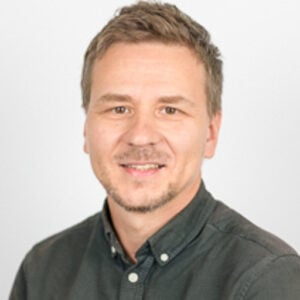
Dr. Nikolay Oskolkov
Nikolay is a bioinformatician, computational biologist, and data scientist working at the intersection of biology, medicine, statistics, and artificial intelligence. His research focuses on applying mathematical statistics, machine learning, and deep learning methods to complex biological and biomedical datasets, including genomics, transcriptomics, microbiome research, single-cell data, metagenomics, and multi-omics integration.
Nikolay has a PhD in theoretical physics from 2007, he transition to the Life Sciences in 2011. He currently leads the Metabolic Research Group (MRG) within the TARGETWISE project at the National Institute of Research and Innovation in Latvia, and having a teaching position at Lund University, Sweden, he has previously held research positions at the Danish Technical University, University of North Carolina, Lund University and the National Bioinformatics Infrastructure Sweden (NBIS/SciLifeLab).
Nikolay has more than 20 years of teaching experience and is widely recognised for his ability to communicate advanced statistical and computational methods to researchers from diverse scientific backgrounds. His expertise spans both frequentist and Bayesian statistics, machine learning, dimensionality reduction, clustering, bioinformatics, and scientific programming in R and Python. He has delivered numerous international workshops, summer schools, and professional training courses in computational biology, genomics, and AI-driven biomedical research.
Education & Career
- PhD in Theoretical Physics (2007)
• Transitioned from theoretical physics to bioinformatics and computational biology in 2011
• Group Leader (PI), Metabolic Research Group, TARGETWISE Project, Latvia
• Former researcher and bioinformatician at Lund University and NBIS/SciLifeLab, Sweden
• Author of more than 60 peer-reviewed scientific publications with extensive international collaborations in computational biology and biomedical research
Research Focus
Nikolay’s work centres on extracting biological insight from large-scale, high-dimensional datasets using advanced statistical and machine learning approaches. His research interests include:
- Machine learning and deep learning for biomedical and omics data
• Multi-omics integration and systems biology
• Single-cell transcriptomics and dimensionality reduction methods
• Population genomics and evolutionary biology
• Microbiome, environmental DNA, and ancient DNA analysis
• Statistical modelling and Bayesian approaches for complex biological systems
• AI applications in precision medicine and drug discovery
Current Projects
- Development of machine learning methods for multi-omics data integration and drug discovery in metabolic diseases
• AI-driven approaches for genomics and computational biology
• Statistical and computational methods for ancient and environmental DNA research
• Machine learning analysis workflows for single-cell and population genomics datasets
• Research on metabolic diseases through integrative bioinformatics and systems biology approaches
Professional Consultancy
Nikolay provides expert consultancy in biological and biomedical data analysis, supporting academic researchers, healthcare scientists, and industry teams. His consultancy expertise includes:
- Bioinformatics and computational biology
• Medical genomics and precision medicine
• Single-cell and multi-omics data analysis
• Metagenomics and population genomics
• Frequentist and Bayesian statistical modelling
• Machine learning and deep learning applications
• Scientific programming in R, Python, Bash, and C++
• Study design, data analysis pipelines, and reproducible research workflows
Teaching & Skills
- More than 20 years of teaching experience in statistics, machine learning, and computational biology
• Teaches topics including machine learning, deep learning, Bayesian statistics, dimensionality reduction, clustering, single-cell analysis, genomics, and bioinformatics
• Instructor for international courses and workshops through organisations including Instats, Physalia, NBIS SciLifeLab, TARGETWISE, and RaukR
• Strong advocate for rigorous statistical thinking, reproducible research, and accessible scientific education
• Experienced in translating advanced computational methods into practical tools for life scientists and healthcare researchers
Links
Session 1 – 02:30:00 – Introduction to Ancient Environmental Metagenomics
Overview of ancient environmental DNA research; sedimentary ancient DNA; reconstruction of past ecosystems; challenges associated with low sequencing coverage, short DNA fragments, and modern contamination.
Break – 01:00:00
Session 2 – 02:30:00 – Quality Control and Read Processing
Quality assessment, adapter trimming, host DNA removal, read filtering, and merging overlapping paired-end reads using fastp and cutadapt.
Session 3 – 02:30:00 – Taxonomic Profiling of Ancient Environmental Metagenomes
Taxonomic classification using Kraken and sourmash; interpretation of taxonomic assignments; filtering based on depth and breadth of coverage; influence of k-mer size on classification performance.
Break – 01:00:00
Session 4 – 02:30:00 – Reference Database Construction and Optimization
Building and curating taxonomic reference databases for mammals, plants, microbes, fungi, and invertebrates; balancing database completeness, computational efficiency, and classification accuracy.
Session 5 – 02:30:00 – Authentication of Ancient Environmental DNA Signals
Genomic hit confirmation strategies; evaluating ancient status; evenness-of-coverage metrics; principles of authentication in environmental metagenomics.
Break – 01:00:00
Session 6 – 02:30:00 – Damage Profiling and Authentication Tools
Using mapDamage and PMDtools to quantify post-mortem DNA damage; interpretation of deamination profiles; validation of ancient DNA authenticity.
Session 7 – 02:30:00 – Decontamination of Metagenomic Data
Sources of contamination in environmental metagenomics; application of decontam, negative controls (blanks), and Recentrifuge for contamination assessment and removal.
Break – 01:00:00
Session 8 – 02:30:00 – Reference Genome and Database Decontamination
Identifying contamination in reference genomes and taxonomic databases; practical application of the GENEX workflow for database curation and quality assurance.
Session 9 – 02:30:00 – Metagenome Assembly and aeMeta Workflow
Metagenome de novo assembly, assembly quality assessment, authentication of assembled contigs, and practical analysis using the aeMeta workflow for ancient environmental metagenomics.
Break – 01:00:00
Session 10 – 02:30:00 – Population Genomics and Ordination Methods
Applications of population genomics to ancient environmental DNA datasets; dimensionality reduction using PCA and UMAP; comparison of ordination methods, effects of uneven sampling, and interpretation of high-dimensional ecological and genomic data.
Testimonials
PR Stats offers a great lineup of courses on statistical and analytical methods that are super relevant for ecologists and biologists. My lab and I have taken several of their courses—like Bayesian mixing models, time series analysis, and machine/deep learning—and we've found them very informative and directly useful for our work. I often recommend PR Stats to my students and colleagues as a great way to brush up on or learn new R-based statistical skills.
Rolando O. Santos
PhD Assistant Professor, Florida International University

Courses attended
SIMM05, IMDL03, ITSA02, GEEE01 and MOVE07
Testimonials
PR Stats provided excellent training in stable isotope analysis through the SIMMPR course, which was incredibly valuable for my research. I was fortunate to attend the course through a generous fee waiver, which directly supported my work and enabled me to develop skills that contributed to my recent publication on reservoir food webs in Sri Lanka. I’m very grateful for the opportunity and support, and would highly recommend their courses to others working in ecological research.

Subodha Silva
Aquatic Ecology Researcher
Courses attended
SIMMPR
Testimonials
PR Stats has become an invaluable part of developing my skills in advanced statistical and spatial analysis. Through training in areas such as Bayesian statistics and Species Distribution Modelling, I’ve gained both practical expertise and exposure to leading experts in the field. The impact on my research has been significant with at least four of my published papers have been directly influenced by PR Stats courses. My most recent work benefitted from modelling advice on sample design and model accuracy evaluation and can be seen here.
Carlos P.E. Bedson
Quantitative Spatial Ecology, Ecology and Environment Research Centre, Manchester Metropolitan University, United Kingdom
Courses attended
ADVR08, ENMR03, BMIN02, ISBD01, BADA01, SDMB06
Frequently asked questions
Everything you need to know about the product and billing.
When will I receive instructions on how to join?
You’ll receive an email on the Friday before the course begins, with full instructions on how to join via Zoom. Please ensure you have Zoom installed in advance.
Do I need administrator rights on my computer?
I’m attending the course live — will I also get access to the session recordings?
I can’t attend every live session — can I join some sessions live and catch up on others later?
I’m in a different time zone and plan to follow the course via recordings. When will these be available?
I can’t attend live — how can I ask questions?
Will I receive a certificate?
When will I receive instructions on how to join?
You’ll receive an email on the Friday before the course begins, with full instructions on how to join via Zoom. Please ensure you have Zoom installed in advance.
Do I need administrator rights on my computer?
I’m attending the course live — will I also get access to the session recordings?
I can’t attend every live session — can I join some sessions live and catch up on others later?
I’m in a different time zone and plan to follow the course via recordings. When will these be available?
I can’t attend live — how can I ask questions?
Will I receive a certificate?
Still have questions?
Can’t find the answer you’re looking for? Please chat to our friendly team.
