


Species Distribution Modelling (SDMs) and Ecological Niche Modelling (ENMs) (SDMR07)
Learn ENM and SDM modelling in R. Apply tools like Maxent and Biomod2 to predict species distributions and environmental niches.
 Duration: 5 Days, 8 hours per day
 Next Date: May 11-15, 2026
 Format: Live Online Format
Portugal (GMT+1) local time - All sessions will be recorded and made available to ensure accessibility for attendees across different time zones.
£480Registration Fee
Register NowLike what you see? Click and share!


- Overview
- Instructors
- Schedule
Course Description
How to build an ecological niche model – ENM? This course covers the fundamental theory and principal methodologies used to build Ecological Niche Models (ENMs). These models, which may also be referred to as species distribution models (SDMs), habitat suitability models, or climate envelope models, represent empirical or mathematical approaches to understanding a species’ ecological niche. ENM techniques can be broadly categorised as mechanistic or correlative. They function by relating known species information (such as geographical locations or physiological data) with various types of ecogeographical variables, including environmental (e.g., climate), topographical (e.g., elevation), and human factors. The ultimate goal is to identify the conditions and factors that limit and define the species’ niche. The increasing popularity of ENMs stems from their utility in making conservation planning and management more effective and efficient.
What You’ll Learn
During the course will cover the following:
- Calculate ecological niche models and specie distribution models.
- Understand their results, as well as to choose and apply the correct .
- How to choose the best methodology depending on the aim of their type of study and data.
Course Format
Interactive Learning Format
Each day features a well-balanced combination of lectures and hands-on practical exercises, with dedicated time for discussing participants’ own data, time permitting.
Global Accessibility
All live sessions are recorded and made available on the same day, ensuring accessibility for participants across different time zones.
Collaborative Discussions
Open discussion sessions provide an opportunity for participants to explore specific research questions and engage with instructors and peers.
Comprehensive Course Materials
All code, datasets, and presentation slides used during the course will be shared with participants by the instructor.
Personalized Data Engagement
Participants are encouraged to bring their own data for discussion and practical application during the course.
Post-Course Support
Participants will receive continued support via email for 30 days following the course, along with on-demand access to session recordings for the same period.
Who Should Attend / Intended Audiences
This course is intended for academics and postgraduate students working on spatial data projects, as well as students and researchers in biogeography, spatial ecology, or related disciplines. The first morning will focus on theoretical foundations, while the following days will be mainly practical, complemented by brief theoretical presentations. All modelling and analysis will be performed using R, the free software environment for statistical computing and graphics (http://www.r-project.org/). Participants will learn to apply modelling algorithms such as Maxent, Bioclim, Domain, and logistic regressions, and will work with R packages like Dismo and Biomod2 for ENM development. They will also learn to compare models using the Ecospat package. Instructors will provide datasets for the practical sessions, although participants are encouraged to bring their own data. In the final session, students will run SDM/ENM using either their own or a new dataset, applying the full range of techniques covered in the course. A basic understanding of statistical and ecological concepts is required.
Equipment and Software requirements
A laptop or desktop computer with a functioning installation of R and RStudio is required. Both R and RStudio are free, open-source programs compatible with Windows, macOS, and Linux systems.
A working webcam is recommended to support interactive elements of the course. We encourage participants to keep their cameras on during live Zoom sessions to foster a more engaging and collaborative environment.
While not essential, using a large monitor—or ideally a dual-monitor setup—can significantly enhance your learning experience by allowing you to view course materials and work in R simultaneously.
All necessary R packages will be introduced and installed during the workshop. A comprehensive list of required packages will also be shared with participants ahead of the course to allow for optional pre-installation.

Dr. Neftalí Sillero
Neftalí is a spatial ecologist specialising in the analysis and identification of biodiversity patterns at multiple scales, from individual organisms to species and populations. His work leverages Geographical Information Systems (GIS), Remote Sensing, Ecological Niche Modelling, and Spatial Statistics to explore how space influences biodiversity dynamics.
His core research interests include species distribution modelling, biogeographical region identification, chorotype analysis, mapping road-kill hotspots, and spatial analysis of animal home ranges. Neftalí has more than a decade of experience in ecological niche modelling and has published over 70 peer-reviewed articles. He also leads large-scale biodiversity mapping initiatives in Europe.
Since 2007, he has served as Chair of the Mapping Committee of the Societas Herpetologica Europaea, where he leads the NA2RE project (New Atlas of Amphibians and Reptiles of Europe).
Education & Career
- 10 years of experience in spatial ecology and ecological niche modelling
- Chair of the Mapping Committee, Societas Herpetologica Europaea (since 2007)
- Principal Investigator of the NA2RE Project – New Atlas of Amphibians and Reptiles of Europe
Research Focus
Neftalí’s research investigates how spatial processes shape biodiversity patterns. He specialises in integrating environmental data, spatial analysis tools, and modelling frameworks to map and predict species distributions and ecological risk zones, such as road-kill hotspots.
Current Projects
- NA2RE – New Atlas of Amphibians and Reptiles of Europe
- Spatial analysis of road mortality hotspots in European amphibians and reptiles
- Identification of biogeographical regions and species chorotypes using advanced modelling techniques
Professional Consultancy
Neftalí advises international conservation initiatives and biodiversity mapping efforts, contributing methodological expertise in GIS, remote sensing, and spatial statistics.
Teaching & Skills
- Specialist in GIS, remote sensing, niche modelling, and spatial statistics
- Experienced in teaching spatial ecology and biodiversity modelling
- Active in promoting spatial tools for conservation planning and policy
Links
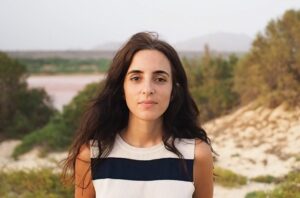
Dr. Diana Sousa-Guedes
Diana is an ecologist working at the intersection of biogeography, spatial ecology, and conservation science, with a particular focus on sea turtle conservation in the context of human-induced global environmental change. Her research integrates Geographic Information Systems (GIS), spatial statistics, ecological niche modelling, and remote sensing to investigate how climate change, pollution, and human activities influence habitat suitability, threat exposure, and population dynamics across spatial and temporal scales.
She completed her PhD in Biology (2025) at the University of Porto.
Education & Career
PhD in Biology, University of Porto (2025)
Researcher in spatial ecology and conservation science
Specialist in applying spatial modelling approaches to marine conservation
Research Focus
Diana’s work centres on understanding how environmental and anthropogenic pressures shape species distributions and population responses. She specialises in integrating spatial data and modelling techniques to assess habitat suitability, identify conservation priorities, and evaluate risks to marine species, particularly sea turtles.
Current Research
Spatial modelling of sea turtle habitat suitability under climate change
Assessment of human-driven threats, including pollution and coastal development
Integration of remote sensing and GIS to analyse environmental change
Investigation of population responses across spatial and temporal gradients
Professional Activities
Contributor to interdisciplinary research at the interface of ecology, geography, and conservation
Engaged in advancing spatial tools for biodiversity conservation and management
Teaching & Skills
Geographic Information Systems (GIS)
Remote Sensing
Ecological Niche Modelling
Spatial Statistics
Spatial analysis for conservation planning
Links
Session 1– 02:00:00
Introduction to ENM theory. Definition of ecological niche model; introduction to species ecological niche theory, types of ecological niches, types of ENM, diagram BAM, ENMs as approximations to species’ niches.
Session 2 – 02:00:00
ENM methods. Mechanistic and correlative models. Overlap Analysis, Biomod, Domain, Habitat, Distance of Mahalanobis, ENFA, Maxent, Logistic regression, Generalised Linear Models, Generalised Additive Models, Generalised Boosted Regression Models, Random Forest, Support Vector Machines, Artificial Neural Network.
Session 3 – 02:00:00
Preparing variables and species data. Getting climatic data from WorldClim and species data from the Global Biodiversity Information Facility using the geodatapackage. Choosing environmental data sources, downloading variables, Clipping variables, Aggregating variables, checking pixel size, checking raster limits, checking NoData, Correlating variables.
Session 4- 03:00:00
Guidelines to calculate ENM. Concepts of ecological niche and how they can be modelled; classes of correlative models; modelling software; selection of study area; data sources for species records and environmental variables; types of species records and their influence on correlative models; errors in species records; minimum number of species records and environmental variables; effects of prevalence, sampling design, biases, and collinearity between variables; model calculation; model projection to different scenarios in time and space; ensemble modelling; model validation; classification, discrimination and calibration metrics; calculation of null models; analysis of model results; and model thresholding.
Session 5- 03:00:00
Modelling with the predicts package. Formatting the data, parameterising the modelling correlative algorithms, calculating the models, evaluating the models, projecting the models over time and space.
Session 6 – 03:00:00
Applications of ENM. Ecological niche identification, Identification of contact zones, Integration with genetical data, Species expansions, Species invasions, Dispersion hypotheses, Species conservation status, Prediction of future conservation problems, Projection to future and past climate change scenarios, Modelling past species, Modelling species richness, Road-kills, Diseases, Windmills, Location of protected areas.
Session 7- 03:00:00
Modelling with the biomod2 package. Formatting the data, parameterising the modelling correlative algorithms, calculating the models, evaluating the models, projecting the models over time and space.
Session 8- 03:00:00
Modelling with Maxent. Formatting the data, parameterising Maxent, calculating the models, evaluating the models, projecting the models over time and space.
Session 9- 03:00:00
Compare statistically two different ecological niche models using the R package ecospat.
Session 10- 03:00:00
Run ecological niche models with your own data.
Session 11- 03:00:00
Participants’ talks. Attendees will have the opportunity to present their own data and analyse which is the best way to successfully obtain an ENM.
Testimonials
PR Stats offers a great lineup of courses on statistical and analytical methods that are super relevant for ecologists and biologists. My lab and I have taken several of their courses—like Bayesian mixing models, time series analysis, and machine/deep learning—and we've found them very informative and directly useful for our work. I often recommend PR Stats to my students and colleagues as a great way to brush up on or learn new R-based statistical skills.

Rolando O. Santos
PhD Assistant Professor, Florida International University

Courses attended
SIMM05, IMDL03, ITSA02, GEEE01 and MOVE07
Testimonials
PR Stats provided excellent training in stable isotope analysis through the SIMMPR course, which was incredibly valuable for my research. I was fortunate to attend the course through a generous fee waiver, which directly supported my work and enabled me to develop skills that contributed to my recent publication on reservoir food webs in Sri Lanka. I’m very grateful for the opportunity and support, and would highly recommend their courses to others working in ecological research.

Subodha Silva
Aquatic Ecology Researcher
Courses attended
SIMMPR
Testimonials
PR Stats has become an invaluable part of developing my skills in advanced statistical and spatial analysis. Through training in areas such as Bayesian statistics and Species Distribution Modelling, I’ve gained both practical expertise and exposure to leading experts in the field. The impact on my research has been significant with at least four of my published papers have been directly influenced by PR Stats courses. My most recent work benefitted from modelling advice on sample design and model accuracy evaluation and can be seen here.
Carlos P.E. Bedson
Quantitative Spatial Ecology, Ecology and Environment Research Centre, Manchester Metropolitan University, United Kingdom
Courses attended
ADVR08, ENMR03, BMIN02, ISBD01, BADA01, SDMB06
Frequently asked questions
Everything you need to know about the product and billing.
When will I receive instructions on how to join?
You’ll receive an email on the Friday before the course begins, with full instructions on how to join via Zoom. Please ensure you have Zoom installed in advance.
Do I need administrator rights on my computer?
I’m attending the course live — will I also get access to the session recordings?
I can’t attend every live session — can I join some sessions live and catch up on others later?
I’m in a different time zone and plan to follow the course via recordings. When will these be available?
I can’t attend live — how can I ask questions?
Will I receive a certificate?
When will I receive instructions on how to join?
You’ll receive an email on the Friday before the course begins, with full instructions on how to join via Zoom. Please ensure you have Zoom installed in advance.
Do I need administrator rights on my computer?
I’m attending the course live — will I also get access to the session recordings?
I can’t attend every live session — can I join some sessions live and catch up on others later?
I’m in a different time zone and plan to follow the course via recordings. When will these be available?
I can’t attend live — how can I ask questions?
Will I receive a certificate?
Still have questions?
Can’t find the answer you’re looking for? Please chat to our friendly team.
