Bulk RNA-seq Analysis (BRNA01)
Learn bulk RNA-seq analysis using R, from quality control and read alignment to differential gene expression, splicing and pathway analysis.
 Duration: 5 Days, 5 Hours per Day
 Next Date: March 1-5, 2027
 Format: Live Online Format
Sweden (GMT+1) local time - All sessions will be recorded and made available to ensure accessibility for attendees across different time zones.
£400Registration Fee
Register NowLike what you see? Click and share!


- Overview
- Instructors
- Schedule
Course Description
Bulk RNA sequencing (RNA-seq) remains the cornerstone of transcriptome analysis, enabling genome-wide quantification of gene expression, detection of differentially expressed genes, and characterization of splicing patterns and pathway-level responses. This practical course introduces the analytical principles and computational workflows used to process, analyse, and interpret bulk RNA-seq datasets, with a strong emphasis on established tools and reproducible pipelines in R and on the command line.
Participants will work through the complete bulk RNA-seq analysis workflow: from quality control and read alignment (STAR) and transcript quantification (Salmon) to exon-level counting (HTSeq, DEXSeq), normalization (TMM, DESeq), batch correction with Combat, and differential expression analysis. The course covers differential gene expression (DGE), differential exon usage and splicing analysis, dimensionality reduction (PCA, t-SNE, UMAP), clustering of samples and genes, and functional interpretation through gene set enrichment analysis (GSEA) and pathway analysis. The course compares commonly used methods, discusses their assumptions and limitations, and emphasizes critical method selection, statistical rigour, and biological interpretation. Practical exercises emphasize reproducible analysis and hands-on experience with real datasets.
What You’ll Learn
- The principles of bulk RNA-seq technologies and the structure of a classical differential expression analysis workflow
- How to assess raw read quality and perform trimming and filtering of low-quality reads and samples in bulk RNA-seq data
- How to align reads with STAR and quantify transcript abundance with Salmon• How read counting with HTSeq and exon-level counting with DEXSeq differ for gene- and exon-level analyses
- How TMM and DESeq normalization approaches differ, and how to choose an appropriate method for bulk RNA-seq data
- How to correct batch effects and assess their impact on biological signals in bulk RNA-seq data
- How to perform differential gene expression analysis and interpret the results• How differential exon usage and splicing analysis reveal transcript-level regulation• How PCA, t-SNE, and UMAP reveal different aspects of sample-level variation in bulk RNA-seq data
- Why PCA is the standard for exploring sample structure, while t-SNE and UMAP require caution in interpretation
- How hierarchical, partitioning, and density-based clustering compare for grouping samples and genes in bulk RNA-seq data
- How to integrate bulk RNA-seq datasets across batches and studies using ComBat, remove unwanted variation (RUV), and related approaches
- How to perform gene set enrichment analysis (GSEA) and pathway analysis to interpret expression changes biologically
Course Format
Interactive Learning Format
Each day features a well-balanced combination of lectures and hands-on practical exercises, with dedicated time for discussing participants’ own data, time permitting.
Global Accessibility
All live sessions are recorded and made available on the same day, ensuring accessibility for participants across different time zones.
Collaborative Discussions
Open discussion sessions provide an opportunity for participants to explore specific research questions and engage with instructors and peers.
Comprehensive Course Materials
All code, datasets, and presentation slides used during the course will be shared with participants by the instructor.
Personalized Data Engagement
Participants are encouraged to bring their own data for discussion and practical application during the course.
Post-Course Support
Participants will receive continued support via email for 30 days following the course, along with on-demand access to session recordings for the same period.
Who Should Attend / Intended Audiences
This course is intended for biologists, ecologists, biomedical researchers, bioinformaticians, computational biologists, postgraduate students, and early-career researchers who want to analyse RNA-seq data. Participants should have a basic understanding of molecular biology and gene expression, and some familiarity with R programming is recommended. Previous experience with single-cell analysis is helpful but not required; the core workflow and key concepts will be introduced during the course.
Equipment and Software requirements
A laptop or desktop computer with internet access is required. The course uses R and RStudio, with practical workflows that may also be run in cloud-based environments such as Google Colab where appropriate. Installation and setup instructions will be shared ahead of the course.
A working webcam is recommended to support interactive elements of the course. We encourage participants to keep their cameras on during live Zoom sessions to foster a more engaging and collaborative environment.
While not essential, using a large monitor—or ideally a dual-monitor setup—can significantly enhance your learning experience by allowing you to view course materials and work in R simultaneously.
The required software and R/Pyhton packages, including packages used for alignment, counting, normalization, integration, visualization, and clustering, will be introduced during the workshop. A package list and optional pre-installation instructions will be shared with participants in advance.
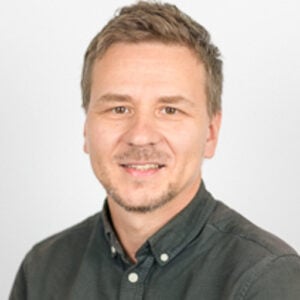
Dr. Nikolay Oskolkov
Nikolay is a bioinformatician, computational biologist, and data scientist working at the intersection of biology, medicine, statistics, and artificial intelligence. His research focuses on applying mathematical statistics, machine learning, and deep learning methods to complex biological and biomedical datasets, including genomics, transcriptomics, microbiome research, single-cell data, metagenomics, and multi-omics integration.
Nikolay has a PhD in theoretical physics from 2007, he transition to the Life Sciences in 2011. He currently leads the Metabolic Research Group (MRG) within the TARGETWISE project at the National Institute of Research and Innovation in Latvia, and having a teaching position at Lund University, Sweden, he has previously held research positions at the Danish Technical University, University of North Carolina, Lund University and the National Bioinformatics Infrastructure Sweden (NBIS/SciLifeLab).
Nikolay has more than 20 years of teaching experience and is widely recognised for his ability to communicate advanced statistical and computational methods to researchers from diverse scientific backgrounds. His expertise spans both frequentist and Bayesian statistics, machine learning, dimensionality reduction, clustering, bioinformatics, and scientific programming in R and Python. He has delivered numerous international workshops, summer schools, and professional training courses in computational biology, genomics, and AI-driven biomedical research.
Education & Career
- PhD in Theoretical Physics (2007)
• Transitioned from theoretical physics to bioinformatics and computational biology in 2011
• Group Leader (PI), Metabolic Research Group, TARGETWISE Project, Latvia
• Former researcher and bioinformatician at Lund University and NBIS/SciLifeLab, Sweden
• Author of more than 60 peer-reviewed scientific publications with extensive international collaborations in computational biology and biomedical research
Research Focus
Nikolay’s work centres on extracting biological insight from large-scale, high-dimensional datasets using advanced statistical and machine learning approaches. His research interests include:
- Machine learning and deep learning for biomedical and omics data
• Multi-omics integration and systems biology
• Single-cell transcriptomics and dimensionality reduction methods
• Population genomics and evolutionary biology
• Microbiome, environmental DNA, and ancient DNA analysis
• Statistical modelling and Bayesian approaches for complex biological systems
• AI applications in precision medicine and drug discovery
Current Projects
- Development of machine learning methods for multi-omics data integration and drug discovery in metabolic diseases
• AI-driven approaches for genomics and computational biology
• Statistical and computational methods for ancient and environmental DNA research
• Machine learning analysis workflows for single-cell and population genomics datasets
• Research on metabolic diseases through integrative bioinformatics and systems biology approaches
Professional Consultancy
Nikolay provides expert consultancy in biological and biomedical data analysis, supporting academic researchers, healthcare scientists, and industry teams. His consultancy expertise includes:
- Bioinformatics and computational biology
• Medical genomics and precision medicine
• Single-cell and multi-omics data analysis
• Metagenomics and population genomics
• Frequentist and Bayesian statistical modelling
• Machine learning and deep learning applications
• Scientific programming in R, Python, Bash, and C++
• Study design, data analysis pipelines, and reproducible research workflows
Teaching & Skills
- More than 20 years of teaching experience in statistics, machine learning, and computational biology
• Teaches topics including machine learning, deep learning, Bayesian statistics, dimensionality reduction, clustering, single-cell analysis, genomics, and bioinformatics
• Instructor for international courses and workshops through organisations including Instats, Physalia, NBIS SciLifeLab, TARGETWISE, and RaukR
• Strong advocate for rigorous statistical thinking, reproducible research, and accessible scientific education
• Experienced in translating advanced computational methods into practical tools for life scientists and healthcare researchers
Links
Session 1 – 02:30:00 – Introduction to bulk RNA-seq and the analysis workflow
Principles of bulk RNA-seq technologies; structure of a classical differential expression analysis workflow; experimental design and replication; raw reads to count matrices; common sources of technical variation.
Break – 01:00:00
Session 2 – 02:30:00 – Quality control, trimming, and alignment
Assessing raw read quality; trimming and filtering of low-quality reads; sample-level QC and outlier detection; read alignment with STAR; practical exercises on real datasets.
Session 3 – 02:30:00 – Transcript quantification and read counting
Transcript abundance quantification with Salmon; pseudo-alignment vs. alignment-based approaches; read counting with HTSeq; how HTSeq gene-level counting and DEXSeq exon-level counting differ for gene- vs. exon-level analyses.
Break – 01:00:00
Session 4 – 02:30:00 – Normalization
Why normalization is required for bulk RNA-seq; comparison of TMM and DESeq normalization approaches; assumptions, strengths, limitations, and how to choose an appropriate method for downstream analysis.
Session 5 – 02:30:00 – Batch effects and correctionSources of batch variation; batch correction with ComBat and related approaches (including RUV); assessing the impact of correction on biological signals; confounding and study-design pitfalls.
Break – 01:00:00
Session 6 – 02:30:00 – Differential gene expression analysisStatistical models for count data; performing DGE analysis and interpreting results (fold changes, shrinkage, multiple-testing correction); practical exercises and critical method selection.
Session 7 – 02:30:00 – Differential exon usage and splicing analysis
Exon-level counting with DEXSeq; differential exon usage and splicing analysis; how transcript-level regulation is revealed beyond gene-level DGE; interpretation and limitations.
Break – 01:00:00
Session 8 – 02:30:00 – Dimensionality reduction and clustering
PCA, t-SNE, and UMAP for sample-level variation; why PCA is the standard for exploring sample structure while t-SNE and UMAP require caution; comparison of hierarchical, partitioning, and density-based clustering for grouping samples and genes; practical exercises.
Session 9 – 02:30:00 – Integration across batches and studiesIntegrating bulk RNA-seq datasets across batches and studies using ComBat, RUV, and related approaches; preserving biologically meaningful variation; workflow considerations and interpretation.
Break – 01:00:00
Session 10 – 02:30:00 – Functional interpretation and reproducible reportingGene set enrichment analysis (GSEA) and pathway analysis to interpret expression changes biologically; ORA vs. GSEA assumptions and limitations; reproducible pipelines in R and on the command line; reporting standards and course-wide discussion of method selection.
Testimonials
PR Stats offers a great lineup of courses on statistical and analytical methods that are super relevant for ecologists and biologists. My lab and I have taken several of their courses—like Bayesian mixing models, time series analysis, and machine/deep learning—and we've found them very informative and directly useful for our work. I often recommend PR Stats to my students and colleagues as a great way to brush up on or learn new R-based statistical skills.
Rolando O. Santos
PhD Assistant Professor, Florida International University

Courses attended
SIMM05, IMDL03, ITSA02, GEEE01 and MOVE07
Testimonials
PR Stats provided excellent training in stable isotope analysis through the SIMMPR course, which was incredibly valuable for my research. I was fortunate to attend the course through a generous fee waiver, which directly supported my work and enabled me to develop skills that contributed to my recent publication on reservoir food webs in Sri Lanka. I’m very grateful for the opportunity and support, and would highly recommend their courses to others working in ecological research.

Subodha Silva
Aquatic Ecology Researcher
Courses attended
SIMMPR
Testimonials
PR Stats has become an invaluable part of developing my skills in advanced statistical and spatial analysis. Through training in areas such as Bayesian statistics and Species Distribution Modelling, I’ve gained both practical expertise and exposure to leading experts in the field. The impact on my research has been significant with at least four of my published papers have been directly influenced by PR Stats courses. My most recent work benefitted from modelling advice on sample design and model accuracy evaluation and can be seen here.
Carlos P.E. Bedson
Quantitative Spatial Ecology, Ecology and Environment Research Centre, Manchester Metropolitan University, United Kingdom
Courses attended
ADVR08, ENMR03, BMIN02, ISBD01, BADA01, SDMB06
Frequently asked questions
Everything you need to know about the product and billing.
When will I receive instructions on how to join?
You’ll receive an email on the Friday before the course begins, with full instructions on how to join via Zoom. Please ensure you have Zoom installed in advance.
Do I need administrator rights on my computer?
I’m attending the course live — will I also get access to the session recordings?
I can’t attend every live session — can I join some sessions live and catch up on others later?
I’m in a different time zone and plan to follow the course via recordings. When will these be available?
I can’t attend live — how can I ask questions?
Will I receive a certificate?
When will I receive instructions on how to join?
You’ll receive an email on the Friday before the course begins, with full instructions on how to join via Zoom. Please ensure you have Zoom installed in advance.
Do I need administrator rights on my computer?
I’m attending the course live — will I also get access to the session recordings?
I can’t attend every live session — can I join some sessions live and catch up on others later?
I’m in a different time zone and plan to follow the course via recordings. When will these be available?
I can’t attend live — how can I ask questions?
Will I receive a certificate?
Still have questions?
Can’t find the answer you’re looking for? Please chat to our friendly team.