


RNA-Seq Analysis (RNAAPR)
RNA-Seq analysis training – recorded course covering experiment design, data QC, alignment, gene expression, DESeq2 differential expression, PCA, visualisation, and functional analysis.
 Duration: 12 Hours
 Format: Recorded ‘on-demand’ Format
£350Registration Fee
Register NowLike what you see? Click and share!


- Overview
- Instructors
- Schedule
Course Description
From planning an RNA-Seq experiment to visualising your results and drawing biological conclusions from your data, this workshop will guide you through every step of data analysis. Learn to avoid common pitfalls and fully exploit this powerful technology to delve into the transcriptome of any organism.
What You’ll Learn
- Understand how to design an RNA-Seq experiment
- Understand the structure of raw RNA-Seq data, and how to perform initial data QC
- Understand how to align RNA-Seq reads to a genome, and perform post alignment quality assessment
- Understand how to identify and deal with possible problems in your data
- Understand the main approaches, and pitfalls in quantifying gene expression
- Understand principal component analysis, and how this can be used to gain insights into RNA-Seq datasets
- Understand how to use DESeq2 to perform appropriate differential expression analysis for any experimental design
- Understand common approaches to visualisation of differential expression analysis
- Understand functional analysis of differential expression
Course Format
Flexible Learning Structure
Learn through a carefully structured mix of lecture recordings and guided exercises that you can pause, revisit, and complete at your own pace—ideal for busy professionals or those balancing multiple commitments.
Access Anytime, Anywhere
All course content is available on-demand, making it accessible across all time zones without the need to attend live sessions or adjust your schedule.
Independent Exploration with Support
Engage deeply with course topics through self-directed study, with the option to reach out to instructors via email for clarification or deeper discussion.
Comprehensive Learning Resources
Gain full access to the same high-quality materials provided in live sessions, including code, datasets, and presentation slides—all available to download and keep. Please note recordings can only be streamed.
Work With Your Own Data, On Your Terms
Apply what you learn directly to your own data projects as you go, allowing for a personalized and immediately practical learning experience.
Continued Guidance and Resource Access
Receive 30 days of post-enrolment email support and unrestricted access to all session recordings for 60 days, so you can review and reinforce your learning as needed.
Who Should Attend / Intended Audiences
Course is suitable Academics, post-graduate students or biotech employees working on, or planning to work on any type of bulk RNA-Seq data.
Participants should have basic experience of R, RStudio and linux, as well as a basic understanding of transcriptomics and molecular biology.
Equipment and Software requirements
A laptop or desktop computer with a reasonable internet connection and a webrowser. No other software is required.
While not essential, using a large monitor – or ideally a dual-monitor setup – can significantly enhance your learning experience by allowing you to view course materials and work in R or linux simultaneously.
All necessary software and packages will be introduced and installed during the workshop.
Dr. Frances Turner
Frances is a bioinformatician at Edinburgh University with extensive experience supporting researchers across the life sciences in analysing and interpreting high-throughput sequencing data. Her work focuses on developing and applying bioinformatics pipelines and analytical approaches that enable scientists to extract meaningful biological insights from complex genomic datasets. She works with a wide range of sequencing applications, including whole-genome, transcriptome, and metagenomic data, and has particular expertise in ensuring data quality, reproducibility, and effective downstream analysis.
Frances has spent many years collaborating closely with research groups from diverse disciplines, providing both technical expertise and strategic advice on study design, sequencing strategy, and data interpretation. Alongside her consultancy and applied work, she is also committed to training and knowledge exchange, delivering workshops and guidance to help life scientists build confidence in handling and analysing their own sequencing data.
Education & Career
- PhD in Bioinformatics
- MSc Bioinformatics
- Bioinformatician at Edinburgh University, providing analysis support and training for high-throughput sequencing projects at the Gene Therapy Mission Hub.
Research Focus
Frances’ work centres on enabling researchers to make the most of next-generation sequencing technologies. She is particularly interested in:
- Developing and refining bioinformatics workflows for diverse sequencing applications
- Supporting reproducible and scalable approaches to data analysis
- Bridging the gap between experimental design and downstream interpretation
Current Projects
- Providing end-to-end analysis support for whole-genome, transcriptomic, and metagenomic studies
- Collaborating with life science researchers on custom data workflows
- Contributing to training programmes that build bioinformatics capacity in the research community
Professional Consultancy
Frances provides expert bioinformatics support to academic and applied research projects, offering guidance on sequencing design, data processing, and statistical interpretation. She regularly collaborates with interdisciplinary teams, ensuring robust, reproducible, and biologically meaningful outcomes.
Teaching & Skills
- Teaches workshops on sequencing data analysis, quality control, and reproducible pipelines
- Skilled in a wide range of bioinformatics tools and platforms for genomic and transcriptomic analysis
- Advocates for open science, reproducibility, and empowering life scientists to engage confidently with their data
Links
• LinkedIn
Session 1 – 01:00:00 – Introduction to RNA-seq
Understanding of the structure of raw RNA-Seq data how to perform initial data QC
Session 2 – 01:00:00 – RNA-seq data QC
Understanding how to align RNA-Seq reads to a genome, perform post alignment quality assessment, and detect and deal with any problems arising from sample or library preparation.
Session 3 – 01:00:00 – Gene expression quantification
Understanding main approaches to, and possible difficulties in, the quantification of gene expression.
Session 4 – 01:00:00 – Introduction to differential expression analysis and DESeq2
Understanding important principles of differential expression analysis
Session 5 – 01:00:00 – Introduction to PCA analysis
Understanding principal component analysis and (PCA), how to explore RNA-Seq data with PCA, filter samples and merge technical replicates.
Session 6 – 01:00:00 – Introduction to differential expression analysis
Understanding how to use a simple linear model to perform differential expression analysis
Advanced differential expression analysis and visualisation
Session 7 – 01:00:00 – Complex experimental designs
Understanding how to model covariates and continuous variables, and how to make more complex comparisons
Session 8 – 01:00:00 – Review of differential expression analysis workflow
Review of differential expression analysis workflow
Session 9 – 01:00:00 – Understanding methods to visualise expression of genes of interest
Understanding methods to visualise expression of genes of interest
Session 10 – 01:00:00 – Volcano plots and MA plots
Understanding common methods for visualisation of differential expression across a whole data set.
Session 11- 01:30:00 – Functional analysis
Understanding functional analysis of differential expression with FGSEA
Session 12 – 01:00:00 – Discussion of participants projects.
A chance to discuss your own projects and ask more detailed questions relating to your own work
Testimonials
PR Stats offers a great lineup of courses on statistical and analytical methods that are super relevant for ecologists and biologists. My lab and I have taken several of their courses—like Bayesian mixing models, time series analysis, and machine/deep learning—and we've found them very informative and directly useful for our work. I often recommend PR Stats to my students and colleagues as a great way to brush up on or learn new R-based statistical skills.
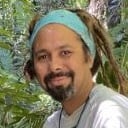
Rolando O. Santos
PhD Assistant Professor, Florida International University

Courses attended
SIMM05, IMDL03, ITSA02, GEEE01 and MOVE07
Testimonials
PR Stats provided excellent training in stable isotope analysis through the SIMMPR course, which was incredibly valuable for my research. I was fortunate to attend the course through a generous fee waiver, which directly supported my work and enabled me to develop skills that contributed to my recent publication on reservoir food webs in Sri Lanka. I’m very grateful for the opportunity and support, and would highly recommend their courses to others working in ecological research.

Subodha Silva
Aquatic Ecology Researcher
Courses attended
SIMMPR
Testimonials
PR Stats has become an invaluable part of developing my skills in advanced statistical and spatial analysis. Through training in areas such as Bayesian statistics and Species Distribution Modelling, I’ve gained both practical expertise and exposure to leading experts in the field. The impact on my research has been significant with at least four of my published papers have been directly influenced by PR Stats courses. My most recent work benefitted from modelling advice on sample design and model accuracy evaluation and can be seen here.
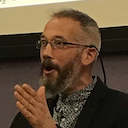
Carlos P.E. Bedson
Quantitative Spatial Ecology, Ecology and Environment Research Centre, Manchester Metropolitan University, United Kingdom
Courses attended
ADVR08, ENMR03, BMIN02, ISBD01, BADA01, SDMB06
Frequently asked questions
Everything you need to know about the product and billing.
When will I receive instructions on how to join?
You’ll receive an email on the Friday before the course begins, with full instructions on how to join via Zoom. Please ensure you have Zoom installed in advance.
Do I need administrator rights on my computer?
I’m attending the course live — will I also get access to the session recordings?
I can’t attend every live session — can I join some sessions live and catch up on others later?
I’m in a different time zone and plan to follow the course via recordings. When will these be available?
I can’t attend live — how can I ask questions?
Will I receive a certificate?
When will I receive instructions on how to join?
You’ll receive an email on the Friday before the course begins, with full instructions on how to join via Zoom. Please ensure you have Zoom installed in advance.
Do I need administrator rights on my computer?
I’m attending the course live — will I also get access to the session recordings?
I can’t attend every live session — can I join some sessions live and catch up on others later?
I’m in a different time zone and plan to follow the course via recordings. When will these be available?
I can’t attend live — how can I ask questions?
Will I receive a certificate?
Still have questions?
Can’t find the answer you’re looking for? Please chat to our friendly team.
